
Running Smarter Events That Strengthen Client Relationships
How to turn expertise into trust, and trust into long-term growth, without losing context along the way.
Professional services teams don’t get many chances to show their work at scale.
Most of the time, your expertise shows up in smaller moments — a client call, a working session, a deliverable review, a recommendation made quietly in a meeting. Those moments matter. But they’re often private, contained, and limited to a few people at a time.
Events are different.
They’re one of the few places where your thinking, judgment, and point of view are visible all at once — to prospects, clients, and partners alike. They’re moments where people decide whether you get it. Whether you understand their world. Whether you’re someone they can trust with bigger conversations.
That’s why events matter so much in professional services. They’re not just something you “run.” They’re moments where trust is either reinforced … or quietly tested.
Turn events into a powerful strategy that builds trust.
This guide is for professional services teams who rely on events to grow their business. Not as one-off marketing plays, but as real moments that influence pipeline, retention, expansion, and long-term relationships.
This guide digs into where friction shows up and where it can be closed:
- Planning events without full visibility into priority accounts, active deals, or key clients
- Building invite lists without clear context on who matters most right now
- Capturing engagement during events, but losing that signal before it’s actionable
- Following up without a shared view of what happened and why it mattered
- Managing events in tools that sit outside the system where relationships actually live>
The goal is to run events that fit naturally into how professional services teams actually work — connected across planning, invitations, execution, and what comes next so expertise carries forward into real relationships and growth.
The Professional Services Event Lifecycle
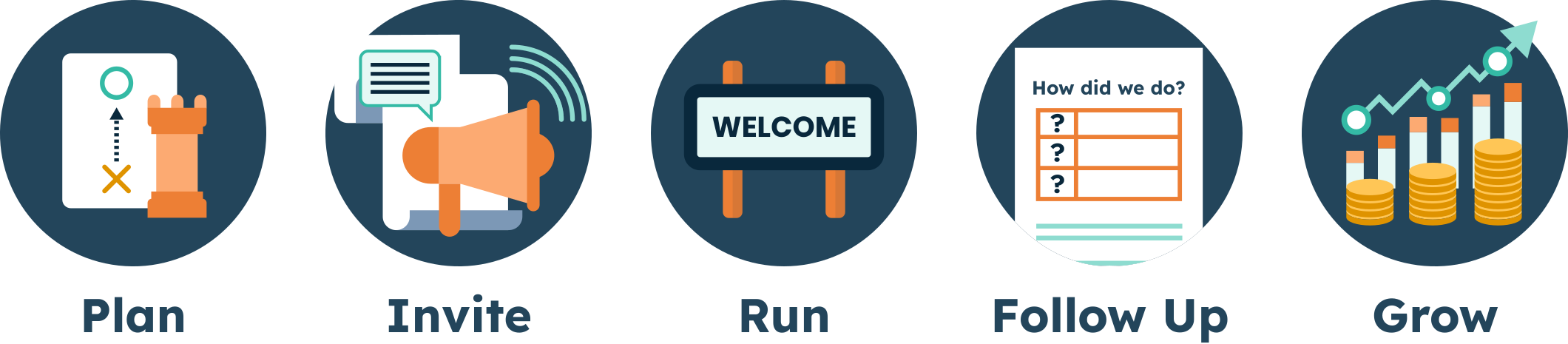
One of the biggest gaps in how teams think about events is treating them like one-off moments. In reality, events span a full lifecycle — and trust is shaped at every step.
Most teams know the pieces. Fewer teams keep them connected.
That lifecycle usually looks something like this:
Where Things Usually Break
Events don’t fall apart in a single step. They unravel in the spaces in between.
An event gets planned without full visibility into the relationships it’s meant to support. Invite lists get built without shared clarity on who actually matters right now. The event itself goes well — but what happened there doesn’t always carry forward. Follow-up starts with partial memory. Growth depends on reconnecting dots after the fact.
To see why events often feel disjointed, it helps to look at what’s happening before, during, and after the event — and where context quietly slips along the way.

1.
Before the event, expectations are already being set.
Who’s invited. Why they’re invited. Whether this event is meant to educate, support an active deal, reinforce an existing relationship, or deepen a partner connection.
Those decisions shape how the event is perceived long before the first slide or discussion.
For professional services teams, this phase is less about scale and more about fit. Planning starts with questions like:
-
What are we trying to educate on right now?
-
Which accounts or prospects should this be relevant to?
-
Are there priority relationships or opportunities this moment is meant to support?
When planning and invitations are grounded in those answers — and informed by real CRM context — the event feels intentional from the start. When they aren’t, relevance slips early, and trust can soften before the event even begins.
2.
During the event, expertise is on display
Who actually shows up matters. Not just registrations, but real attendance — which accounts made the time, which clients or prospects prioritized being there, and what that signals about where conversations could go next.
This is also where messaging gets tested in real time. Seeing which priority accounts are present gives teams the chance to lean in, emphasize what’s most relevant, and meet the room where it actually is — not where they assumed it would be.
-
Who actually showed up?
-
Which accounts made the time?
-
What does that signal about where trust already exists — or could deepen next?
When that context stays connected to CRM data, the event becomes responsive instead of static. When it doesn’t, teams miss the chance to adjust, reinforce relevance, and carry the right message forward.
3.
After the event, trust compounds — or it doesn't.
What happens after the event is just as much as what happened in the room.
Who teams follow up with, how quickly they move, and whether the conversation builds or restarts all signal how well the relationship is actually understood.
This is where momentum either compounds or quietly disappears. Follow-up isn’t just about speed, it’s about carrying the right context into the next conversation.
-
Who should sales prioritize based on who actually attended?
-
What should delivery already know before the next client call?
-
Which conversations should continue — not restart — because of this event?
When that context lives alongside CRM data, teams move forward with confidence. When it doesn’t, teams hesitate, messages get generic, and trust softens — not loudly, but noticeably.
Why Missing Context Undermines Expertise
In professional services, expertise isn’t just about what you present in the moment. It’s about what carries forward, and how consistently your team shows awareness from one interaction to the next.
When someone attends your event — a prospect, a client, a partner — they’re investing time and attention. They expect the next conversation to reflect that context. When it doesn’t, it doesn’t feel like a simple miss. It feels like a gap in understanding.
That’s why disjointed events are so costly for services teams. Not because they fail outright, but because they quietly weaken confidence in how well your firm understands and manages relationships.
However events are connected across the full lifecycle, three things start to happen:
Intentional Events
Planned around priority clients, active opportunities, and real relationship moments.
Strategic Invitations
Built from CRM context, not spreadsheets or best guesses, so the right people are in the room.
Informed Follow-Up
Grounded in who attended and why it mattered, so sales, delivery, and ops can move forward with confidence.
How Events Stop Being Black Holes and Start Reinforcing Trust
When events are managed alongside CRM data, they stop being black holes and become moments that reinforce trust, sharpen conversations, and move relationships forward. The scenarios that follow show how trust is shaped in the real world across planning, execution, and what comes next.
Running a webinar intended to attract new clients
Your team wants to run an educational webinar tied to a meaningful industry shift — something your firm is well positioned to speak to.
The intent is clear: show how you think, attract the right prospects, and create a moment that could lead to future conversations.
It’s whether the webinar will resonate with the right audience and actually drive pipeline once it’s over.
Planning starts without a clear, shared view of the audience the webinar is meant to attract.
- Who should be invited based on where they are in the pipeline?
- Which accounts would actually benefit from this topic right now?
- Is this webinar meant to open new conversations or reinforce ones already forming?
Invite lists are pulled from different places and shift as plans change, making it harder to trust that the right audience is even being invited.
The webinar draws interest, but audience quality slips and the moment struggles to translate into meaningful pipeline movement.
When invite strategy lives alongside the event in your CRM, teams have a clear view of who was invited and why.
Marketing and sales can see the same invite lists on the event record. It’s clear which audiences were intentional and what the webinar was meant to support before conversations ever start.
Marketing is confident the webinar reached a relevant audience, setting sales up for stronger conversations.
When planning and invitations are grounded in CRM data, events stop being educated guesses and start becoming deliberate trust-building moments across the lifecycle.
A virtual client workshop designed to deliver value
Your team plans a client-only workshop around a challenge several clients are actively navigating right now.
The intent is straightforward: share practical guidance, reinforce expertise, and create value that strengthens existing relationships.
The invite list is intentional — focused on accounts you care deeply about retaining, expanding, and serving well.
At this point, the value of the workshop depends entirely on whether that context carries forward.
After the workshop, delivery teams don’t have a clear view of who attended or how this moment fits into each client relationship.
- Who attended from each client account?
- What was this workshop meant to support — retention, expansion, active work?
- Where should the next conversation pick up?
Without that visibility living alongside the relationship, teams rely on memory or scattered notes. And before the next call, someone inevitably asks the client to recap what they already sat through.
The workshop reinforces expertise, but the relationship doesn’t fully benefit from it.
When invite strategy lives alongside your CRM data, planning gets simpler.
Marketing isn’t chasing lists or second-guessing audience choices. Sales has a clear view of who’s being invited and how the webinar fits into real conversations. Invite decisions are easier to make because the context is already there.
The next conversation picks up exactly where the workshop left off, reinforcing trust instead of testing it.
In professional services, value isn’t just delivered in the room — it’s proven in what happens next. When workshops stay connected to client context, expertise compounds instead of resetting.
An in-person happy hour to strengthen relationships and surface opportunity
Your team wants to host a happy hour alongside a major industry event.
The intent is to create a relaxed, high-value moment for priority accounts, active opportunities, and strategic prospects without overfilling the room.
The real value of the event depends on delivering a memorable experience and clearly understanding who’s in the room and why (beyond just paying for a bar tab).
Registration exists, but it’s disconnected from account context. There is no check-in process and teams don’t have a shared view of who’s expected, who matters most, or why each person is there.
- Are priority accounts confirmed to attend, or just invited?
- Who actually showed up in the room, in real time?
- Who should sales or leadership be connecting with while the event is happening?
When the experience feels uncoordinated, it quietly sets expectations for how coordinated things might feel after the event, too.
The room fills and conversations happen, but some moments get lost, and so does the clarity around where opportunity actually sits.
Teams know who’s expected, who actually arrives, and how each person ties back to priority accounts and active opportunities.
That context carries forward automatically, so follow-up doesn’t start from scratch once the event ends.
Attendees feel recognized and well taken care of in the moment — and follow-up is fast, relevant, and confident because it’s grounded in who showed up and why the moment mattered.
In-person events build trust in real time , but they also set expectations. When the experience is clear, intentional, and well-run, people assume the relationship will be too. When it isn’t, doubt creeps in before anyone says a word.
The Payoff of Connected Events
When events are planned, run, and followed up on alongside your CRM, professional services teams stop reacting and start operating with intention that compounds with trust, and the impact shows up everywhere.
Client relationships last longer
Retainers grow as trust deepens
Teams move with more intention
Expertise is reinforced across every interaction
Building trust, one event at a time.
Professional services is a trust business.
Events are one of the clearest ways to demonstrate that trust, especially when they’re planned with intent, managed with context, and followed up with care.
When everything lives inside your CRM, your firm shows up prepared, informed, and buttoned up every single time. Planning is grounded in real relationships. Invitations reflect priority accounts. Attendance informs follow-up. Nothing gets lost between moments.
That’s how expertise carries forward — not just in the room, but in every conversation that follows.