
Event programs have gotten a lot more sophisticated over the years.
Some teams are running simple free RSVP events for customers or prospects. Others are managing paid conferences with VIP access, sponsors, workshops, group registrations, and multiple attendee experiences layered into the same event.
And increasingly, teams need to support both. And it's where traditional registration experiences start to feel limiting.
Because registration isn’t just about collecting signups anymore. It shapes the attendee experience, impacts operations behind the scenes, and determines how much flexibility your team has to actually run the event the way it needs to run.
That shift is exactly what inspired hapily’s new Advanced Registration experience.
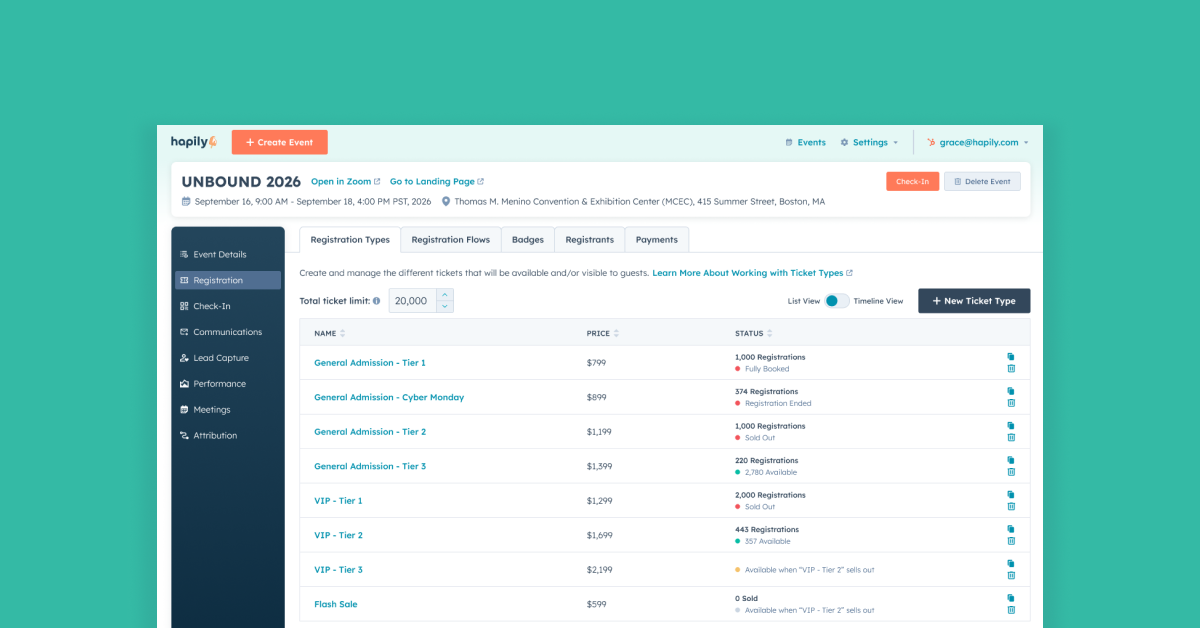
Built for everything from simple RSVP flows to highly customized paid event programs, Advanced Registration gives teams more flexibility and control over how attendees move through registration — while keeping every interaction connected directly to HubSpot.
And it all starts with Registration & Ticket Types.
Because before someone registers, purchases a ticket, or selects a session, your team needs a way to structure the experience intentionally from the very beginning.
If you don't feel like reading, Max breaks it all down in this video below 👇
Types Are About More Than Pricing
When people think about different registration types, they usually think:
- Early bird
- General admission
- VIP
But modern event teams are using ticket types to do much more than organize pricing.
They’re using them to shape experiences, control access, support different attendee journeys, and create more intentional event operations from the very beginning.
One event may only need a simple RSVP registration path. Another may require:
- Sponsor registration
- Partner access
- Member pricing
- Complimentary tickets
- Limited-capacity workshops
- Internal attendee types
- Paid upgrade experiences
- Group or team registration
The point isn’t complexity for the sake of complexity. It’s giving teams the flexibility to structure registration around how their event actually operates.
Why Offer Different Ticket Types?
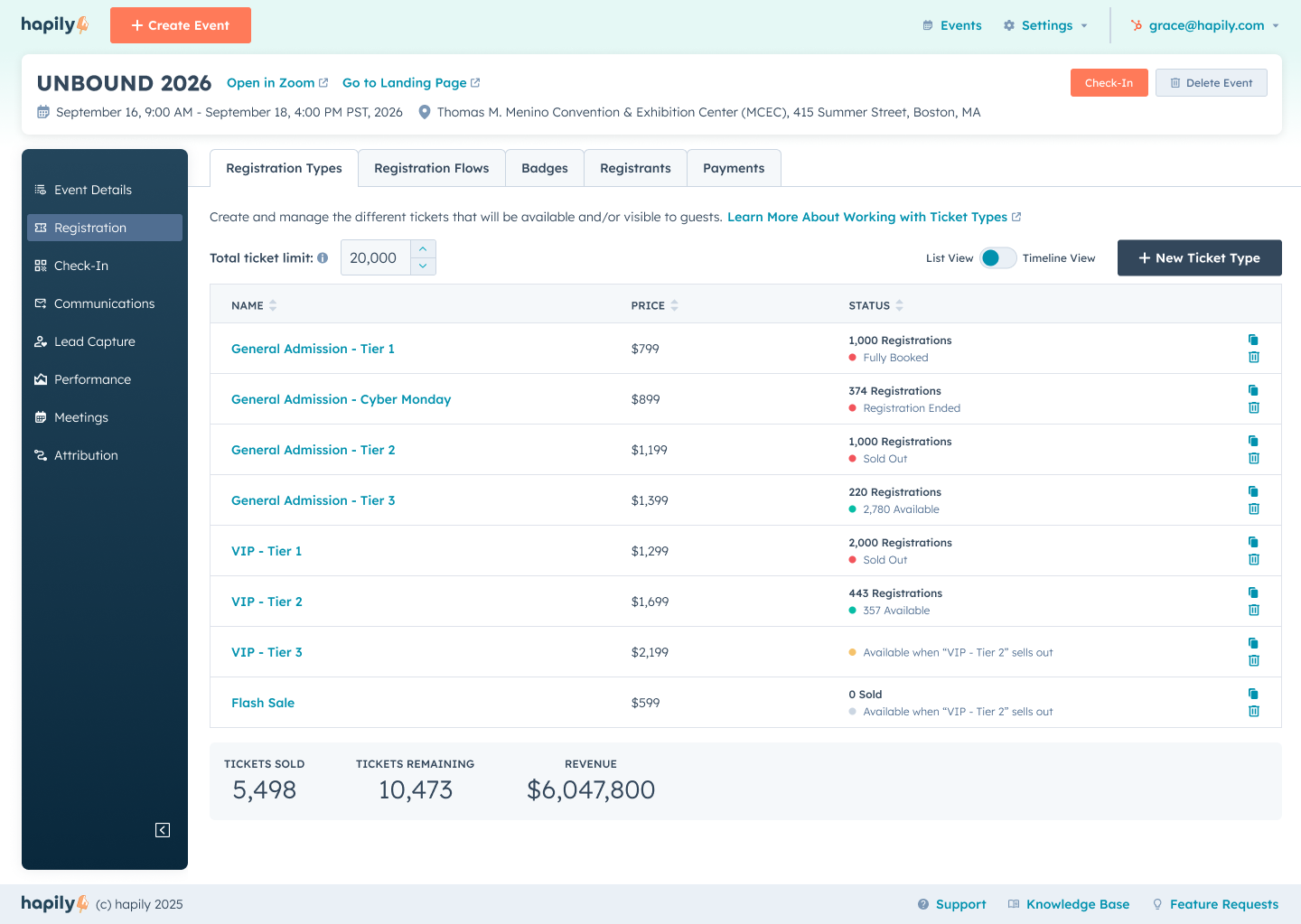
Different attendee types create different goals, experiences, and operational needs.
Sometimes ticket types help drive revenue. Other times they help create better audience segmentation, smoother event logistics, or more curated attendee experiences.
And not every registration path needs to be paid.
Some events may charge for premium access while offering complimentary tickets for sponsors, speakers, partners, or strategic invitees. Others may run completely free RSVP events while still needing structured attendee experiences and registration controls behind the scenes.
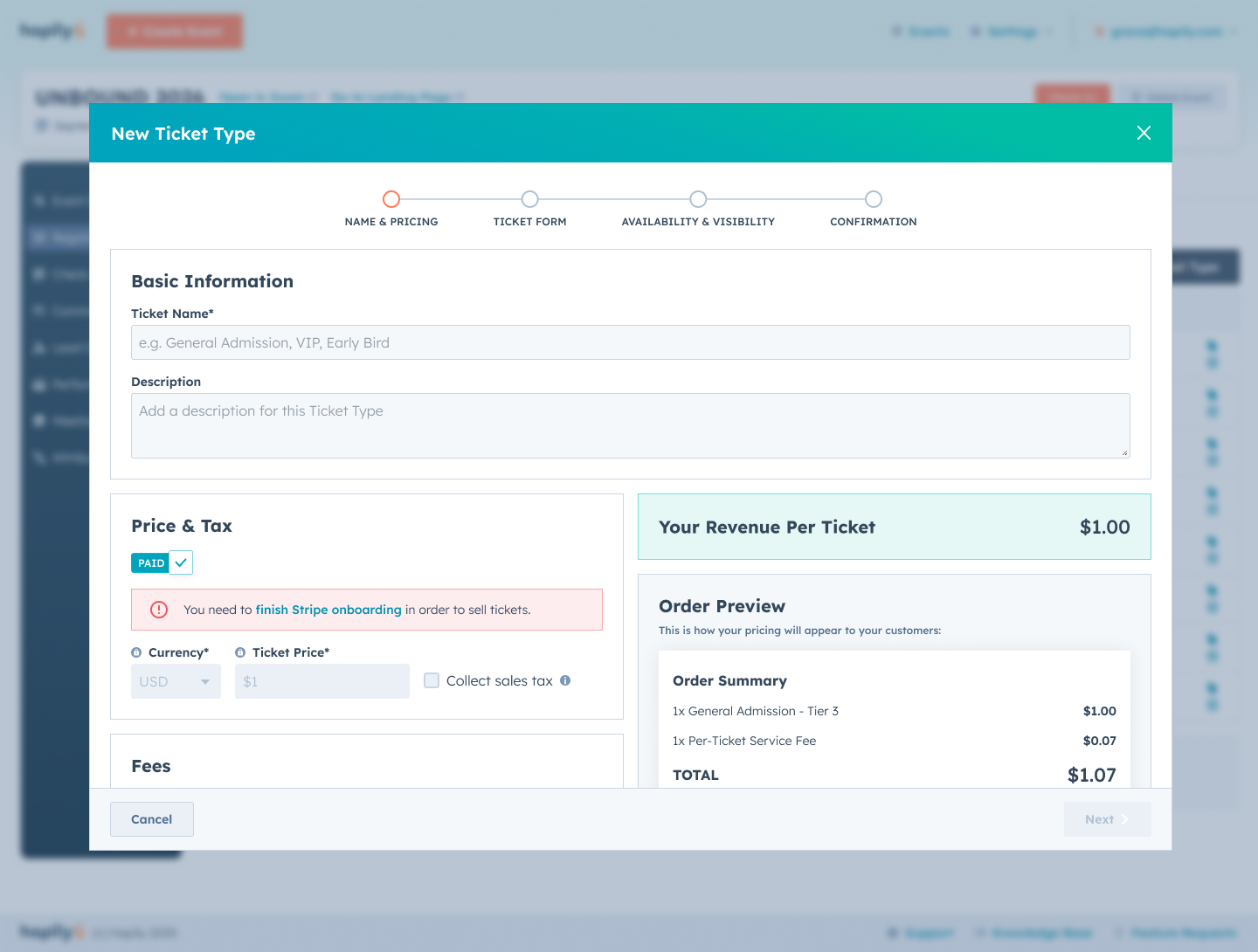
The flexibility to decide when to charge, what to charge for, and who gets access matters just as much as the registration experience itself.
A few common examples:
- Offering early bird pricing to encourage faster registration
- Creating VIP experiences with exclusive access or perks
- Giving sponsors or partners their own registration path
- Limiting workshop attendance based on capacity
- Offering member or customer-only pricing
- Supporting team registrations for companies sending multiple attendees
- Separating internal attendees from external guests
- Creating complimentary passes for strategic invitees
- Running paid and free registration experiences side-by-side
Not every event needs all of these. But event teams need the flexibility to support them when they do.
When Registration Doesn’t Happen All at Once
Most events don’t open registration with a single ticket and call it a day.
There are usually moving pieces behind the scenes:
- Early bird pricing
- VIP pre-sale access
- Sponsor registration windows
- Timed ticket releases
- Limited inventory
- Waitlists
- General admission launches after other tiers sell out
One event may release VIP tickets first, then open general admission later. Another may cap workshop access separately from the main event. Some teams run paid and complimentary registrations side-by-side with different availability rules.
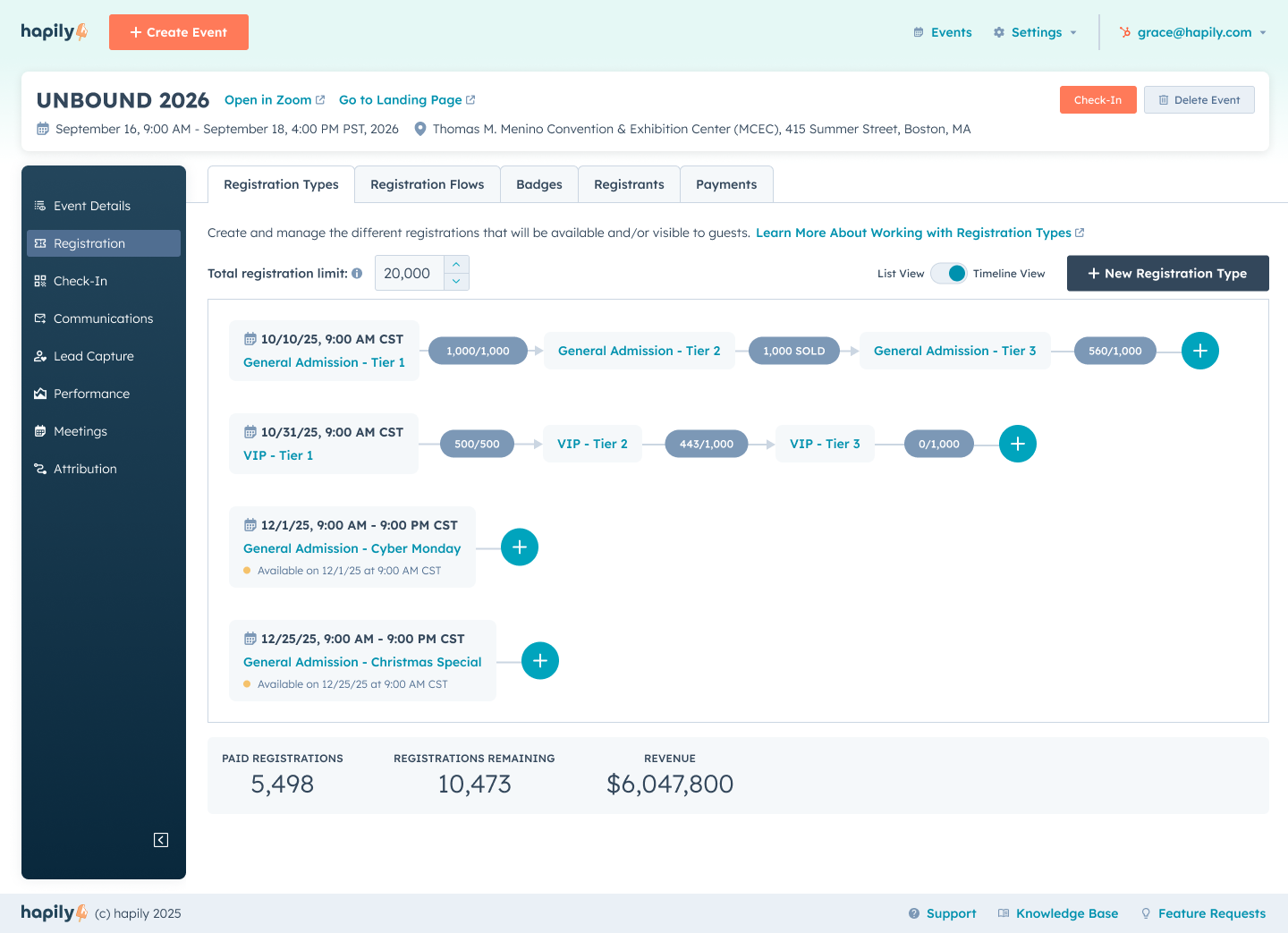
The point is — registration tends to evolve as the event takes shape.
Managing those moving pieces manually gets complicated fast, especially when ticket availability depends on timing, inventory, or other ticket types selling out first.
That’s why Types inside hapily support:
- Availability windows
- Capacity controls
- Tiered pricing
- Ticket dependencies
- Concurrent ticket sales
- Waitlists
So your registration strategy can evolve alongside your event instead of forcing everything into one static setup.
Different Attendees Need Different Experiences
Not every attendee should move through registration the same way.
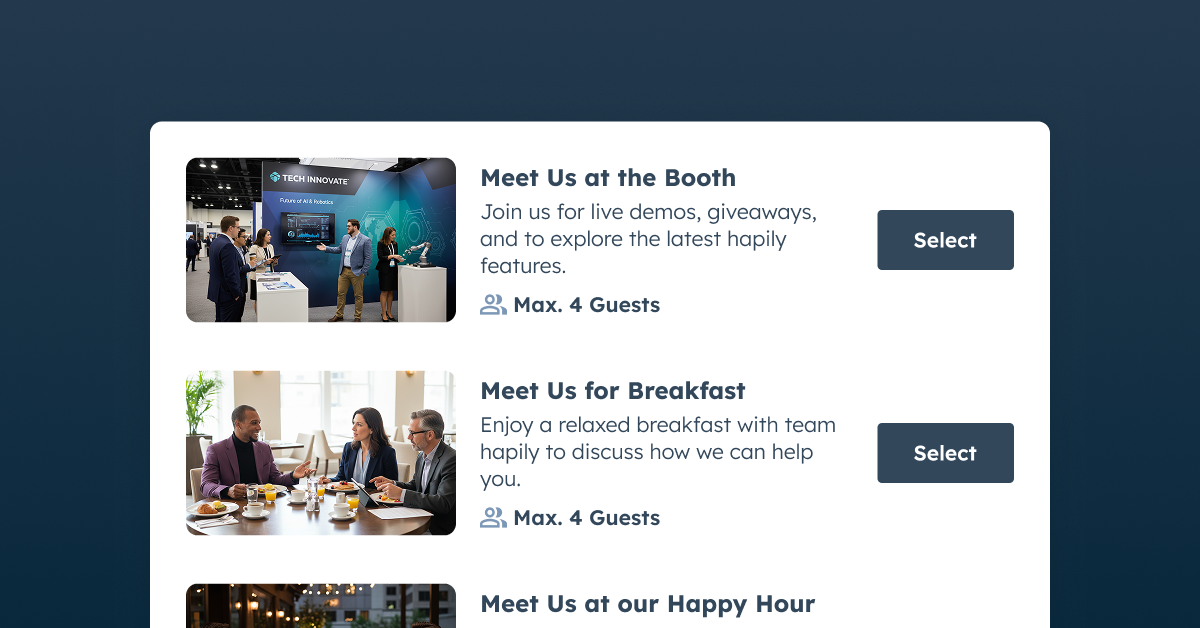
A VIP guest may need meal selections or exclusive session access. Sponsors may need to submit company details or booth information. Someone registering an entire team probably doesn’t want to manually fill out the same form over and over again.
Different attendee types create different experiences — and your registration process should support that naturally.
This is where flexible ticket types become incredibly valuable.
Teams can tailor registration requirements, attendee information, activate group registration, and set access levels based on the experience they’re trying to create instead of forcing every registrant through the exact same process.
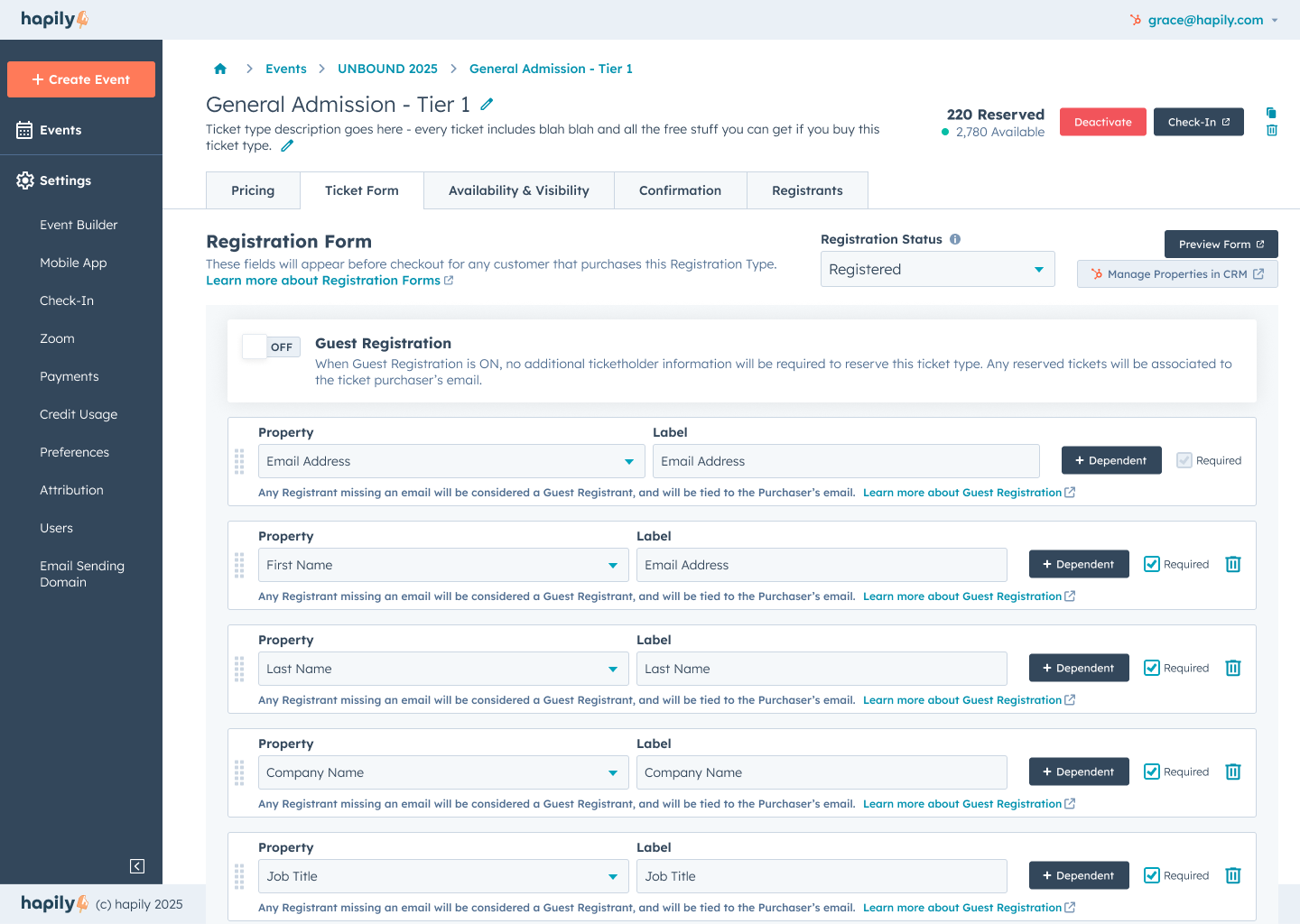
The result is a smoother attendee experience, cleaner event data, and far less operational friction for the team managing everything behind the scenes.
Simple when you need it. Powerful when you don’t.
Registration Should Fuel Your CRM, Not Sit Outside of It
This is where things get really interesting. Most registration systems stop at collecting attendee information. But when ticket types are connected directly to your CRM, registration becomes significantly more valuable.
Instead of attendee data living in a disconnected platform, teams can use registration activity to:
- Segment audiences more intelligently
- Trigger automation and follow-up
- Personalize communication
- Track attendee engagement
- Improve reporting and visibility
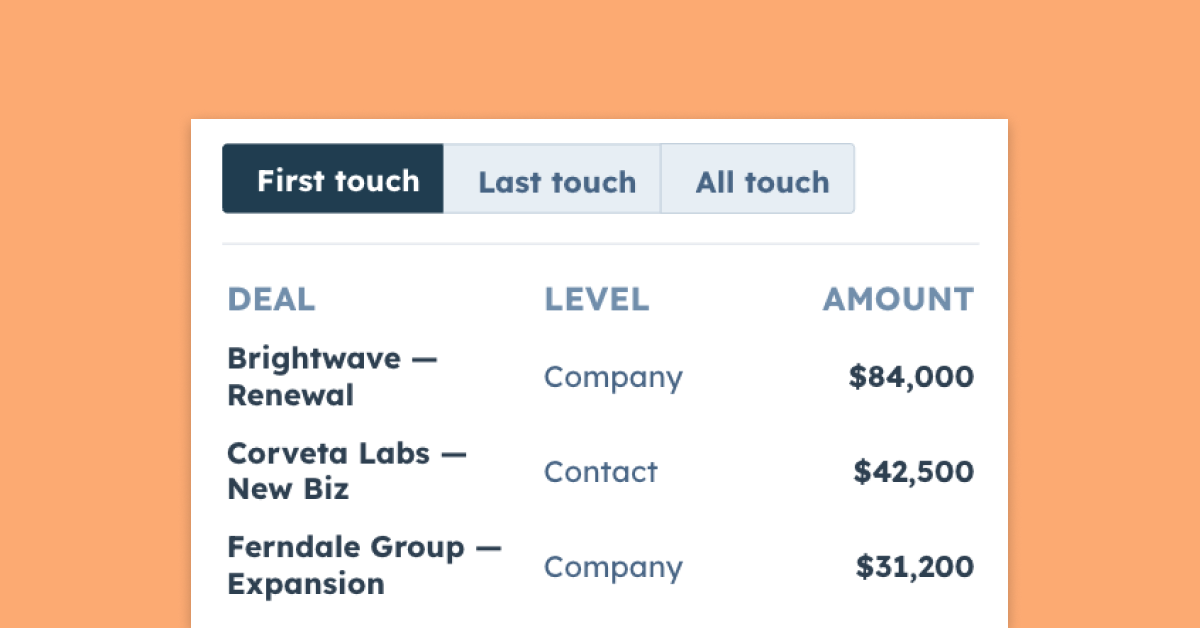
- Connect registration activity back to pipeline and revenue
With hapily, your types become more than registration settings. They become structured event data inside HubSpot that your team can actually act on and creates a much stronger foundation for everything that happens after someone registers.
Your Events Deserve More Intentional Registration Experiences
The way teams run events has evolved dramatically over the last few years.
Registration should evolve with it.
Because the structure of your registration experience impacts more than signups. It shapes attendee expectations, operational efficiency, event flexibility, and the quality of the data your team walks away with afterward.
Offering different types help modern event teams create more intentional experiences from the very beginning — while giving them the flexibility to run events their way.
And this is only the beginning of what hapily's advanced registration unlocks 🎉
Prepping for your next event? Request a demo to see how hapily can help your team capture better data, deliver a seamless attendee experience, and turn interactions into stronger pipeline.

.png)